Sulfur Smell in Your Florida Water? Here's What's Causing It and How to Fix It
If the water coming out of your tap smells like rotten eggs, you are not imagining it and you are not alone. Hydrogen sulfide — the compound responsible for that distinctive sulfur odor — is one of the most common water quality complaints among Florida homeowners, particularly those on private wells. It is unpleasant, it can be embarrassing, and it affects everything from your morning shower to the way your coffee and drinking water taste. Here is what is actually causing it and what gets rid of it for good.
What Is Causing the Rotten Egg Smell?
The smell comes from hydrogen sulfide gas dissolved in your water. It is produced naturally in groundwater through two primary processes. The first is the chemical reduction of sulfate minerals — which are abundant in Florida's limestone-rich aquifer — when they come into contact with certain organic materials underground. The second is the activity of sulfur bacteria, which are naturally occurring microorganisms that thrive in low-oxygen environments like groundwater aquifers and well systems.
In either case, the result is the same: water that carries dissolved hydrogen sulfide gas, which releases into the air the moment it comes out of your faucet, showerhead, or any other outlet. Even very small concentrations — as low as 0.5 parts per million — are detectable by smell. At higher concentrations the odor becomes more intense and the water may also taste metallic or bitter.
Is Hydrogen Sulfide in Water Dangerous?
At the concentrations typically found in residential well water in Florida, hydrogen sulfide is not considered a direct health threat for most people. However, that does not mean it should be ignored.
High concentrations of hydrogen sulfide gas can be toxic and are a serious concern in industrial settings, but these levels are far above what you would find in a household well. At low concentrations the more significant concern is not the gas itself but what it signals about your water's overall quality. Sulfur-producing bacteria in a well system are a sign the well may benefit from inspection and treatment. Hydrogen sulfide is also corrosive to plumbing fixtures, copper pipes, and water-using appliances, causing blackening of silverware and darkening of copper fixtures over time. And regardless of the health question, water that smells like rotten eggs is simply not water you want to cook with, bathe in, or drink.
Why Is It So Common in Florida?
Florida's geology creates ideal conditions for hydrogen sulfide in groundwater. The state sits on thick layers of carbonate rock — primarily limestone and dolomite — that contain abundant sulfate minerals. The Floridan Aquifer, which supplies well water for millions of Floridians across Polk, Hillsborough, Pasco, Sumter, Lake, and Manatee counties, passes through these formations before reaching your well. Add the state's warm temperatures, which accelerate bacterial activity, and you have conditions that make sulfur odor in well water extremely common throughout Central Florida.
Well depth matters too. Shallow wells sometimes pull from zones with higher bacterial activity and organic content. Deeper wells may encounter higher concentrations of dissolved sulfate from the rock formation itself. Either way, the result is water that does not smell the way water should.
What Does NOT Fix the Sulfur Smell
A standard water softener is not designed to address hydrogen sulfide. Softeners use ion exchange resin to remove hardness minerals — calcium and magnesium — and that process does not capture dissolved gas. Running sulfur-affected water through a softener without pretreatment can actually cause problems over time, as hydrogen sulfide can damage softening resin and reduce its effectiveness.
Similarly, basic carbon filters alone may not be sufficient for higher concentrations of hydrogen sulfide, though activated carbon does provide some odor reduction at low levels.
What Actually Works
The right treatment depends on the concentration of hydrogen sulfide and whether it is coming from bacterial activity or dissolved gas from the aquifer. A water test identifies which situation you are dealing with and guides the treatment approach.
Aeration
Aeration exposes the water to air, allowing hydrogen sulfide gas to escape before the water enters the home's plumbing system. This is one of the most effective approaches for moderate to high concentrations and works without chemicals.
Catalytic Carbon Filtration
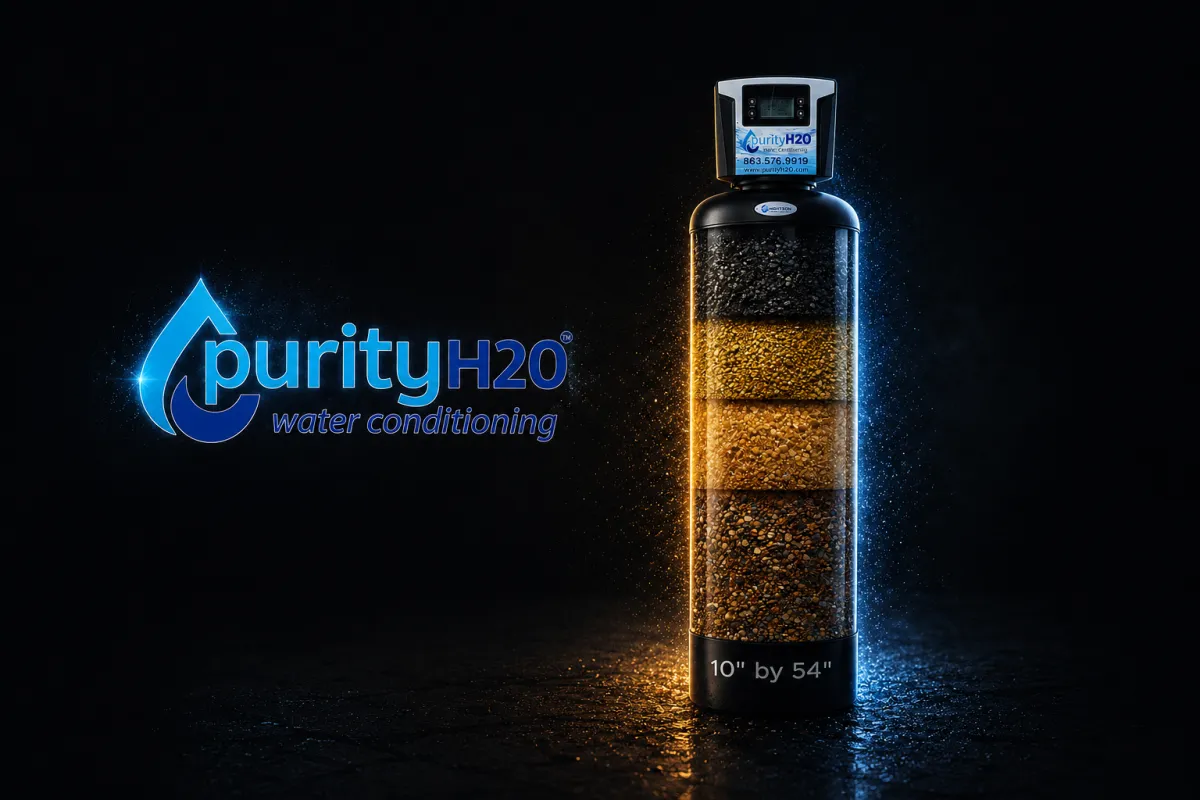
Catalytic activated carbon is more effective than standard activated carbon at oxidizing and adsorbing hydrogen sulfide. It is a common component in whole-home conditioning systems for Florida well water and can significantly reduce sulfur odor at low to moderate concentrations.
Oxidation and Filtration
For higher concentrations, oxidizing the hydrogen sulfide — converting it to elemental sulfur that can then be filtered out — is a highly effective treatment approach. This can be done with chlorination, ozone injection, or air injection followed by filtration through an appropriate media bed.
Well Shock Chlorination
If sulfur bacteria in the well itself are contributing to the problem, a professional well chlorination can eliminate the bacterial source. This is often recommended as part of a broader water treatment approach rather than a standalone fix.
Get a Free Water Test First
Before selecting any treatment, a free in-home water test is the right starting point. It identifies whether hydrogen sulfide is present, at what concentration, and whether bacteria are a contributing factor. That information determines whether you need an aeration system, catalytic carbon filtration, oxidation treatment, or a combination approach.
Purity H2O provides free in-home water tests throughout Lakeland, Mulberry, Bartow, Zephyrhills, Plant City, Dade City, Land O' Lakes, Parrish, and surrounding Central Florida communities. If your water smells like sulfur or rotten eggs, do not keep living with it — the right solution exists and starts with understanding what is actually in your water.